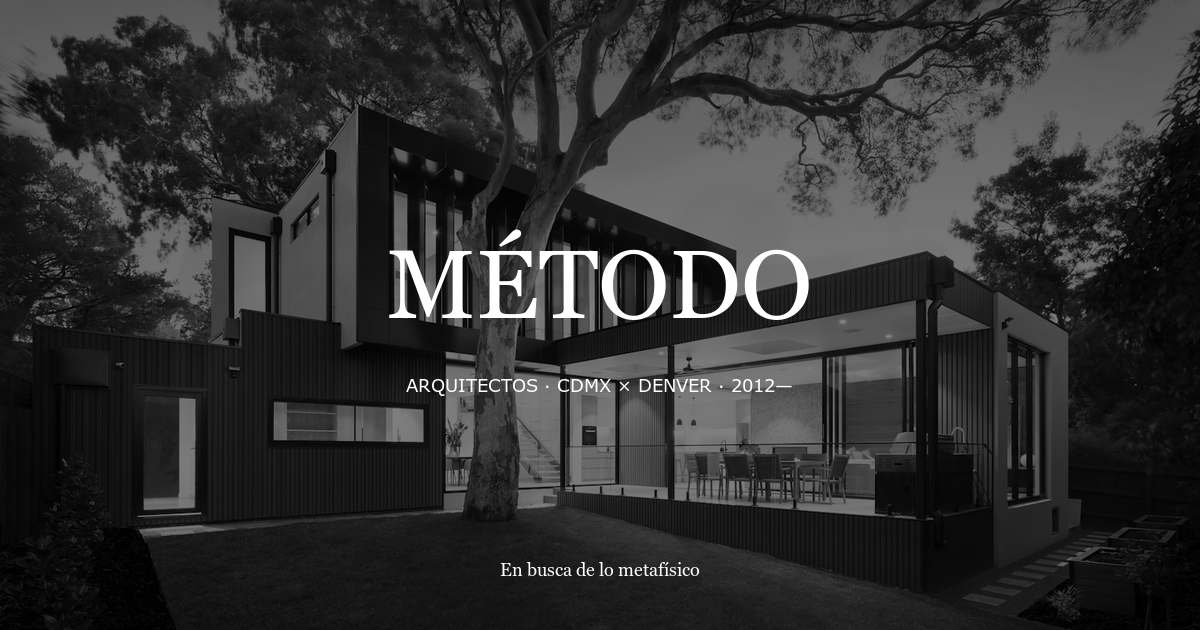
A mountain modern home in Colorado begins not with a floor plan but with a landscape that refuses to be ignored. The Front Range and the high country impose a scale that no building can compete with, and the first act of design is to accept that. Mountain modern, at its best, is not a style applied to a house but an attitude toward a place: a willingness to let the mountain remain the protagonist and to make the architecture a quiet, precise instrument for experiencing it.
Letting the site lead
Before a single wall is drawn, we spend time with the land itself. Where does the sun arrive in December, when it is low and scarce, and where does it punish in July? Which views deserve to be framed, and which are better left as a slow reveal, glimpsed only as you move through the house? The topography, the prevailing wind, the line of the trees, the way water moves across the ground in spring melt, all of this is information. A house that answers these questions feels inevitable. A house that ignores them feels imposed.
Material honesty
Mountain modern is often reduced to a vocabulary of steel, glass, and heavy timber, but the vocabulary matters less than the honesty behind it. Stone that looks like it was quarried nearby, wood that will silver gracefully with altitude and sun, metal that acknowledges the weather rather than pretending to defeat it. We favor materials that age with dignity, because a mountain house is exposed to extremes and will show its life. The goal is a building that looks more, not less, at home a decade after it is finished.
Light as structure
At altitude the light is harder and clearer, and it becomes one of the most important materials in the house. Large openings are tempting, but glass without discipline turns a home into a greenhouse in summer and a heat sink in winter. We think carefully about overhangs, about the depth of a reveal, about how a clerestory can wash a stone wall with morning light while keeping the afternoon sun at bay. The metaphysical quality people describe in mountain houses, that sense of calm and elevation, is almost always a story about light handled with care.
Performance is not optional
Colorado's climate is unforgiving, and a beautiful mountain home that cannot hold its warmth or shed its snow load is a failure regardless of how it photographs. Envelope performance, thermal bridging, snow management, wildfire-resistant detailing where the site demands it, these are not afterthoughts layered on at the end. They are part of the composition from the first sketch. Good performance, handled well, is invisible. You feel it only as comfort.
Restraint as luxury
The temptation in a spectacular setting is to do too much, to answer a grand landscape with a grand gesture. We tend to move in the opposite direction. The luxury of a mountain modern home is often its quiet: fewer materials, cleaner joints, rooms that are calm enough to let the view and the weather fill them. Restraint is harder than abundance. It requires knowing what to leave out, and trusting the place to do the rest.
A home that belongs to its altitude
A mountain modern home in Colorado should feel as though it could exist nowhere else. Not a coastal house transplanted to the Rockies, not a catalog of trends, but a building shaped by this specific light, this specific slope, this specific relationship between shelter and sky. That is the work: to design in search of the metaphysical through design and observation, and to let the mountain remain the reason you built there at all.
Begin the conversation
Every project starts with a conversation, not a drawing. If you are weighing a project in Denver or across Colorado, we would welcome the chance to understand what you are trying to make. Schedule a first meeting or reach us on WhatsApp to talk through your ideas, your site, and how MÉTODO works.