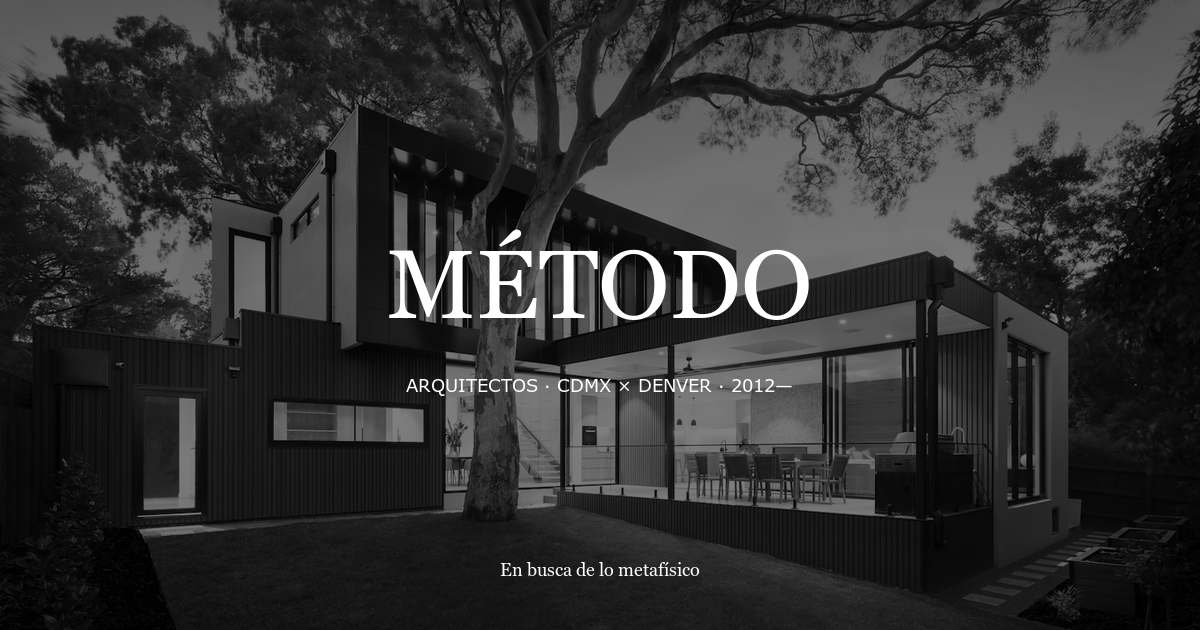
Nayarit's Pacific coast offers one of Mexico's most compelling sites for residential architecture: the view is west-facing (sunset over water), the vegetation is tropical dry forest, and the climate is warm year-round with a pronounced rainy season. The design problem is not how to capture the beauty — it is how to build a house that remains comfortable, durable, and livable when the sun is at its most aggressive and the humidity is at its highest.
Orientation and the west-facing view
Most desirable coastal lots in Nayarit face west. The ocean is to the west. The sunset is to the west. The afternoon sun is also to the west, and it is the hottest, most direct sun of the day.
The design response is not to close the view — it is to mediate the thermal load while maintaining visual access. Tools:
- Deep covered terrace: A roofed outdoor living area between the interior and the view glazing. The terrace shades the glass from above while providing usable outdoor space.
- Vertical fins: Concrete or stone elements that block late-afternoon sun from a specific angle while preserving views from seated height.
- Operable louvers: Wood or aluminum louvers on the exterior of west-facing glazing, adjusted seasonally. More maintenance than a fixed overhang; more flexibility.
We calculate the overhang depth or fin geometry from the sun angle at the summer solstice at the project's specific latitude — this is asoleamiento applied to a coastal section. For a site at approximately 21 degrees north latitude (the Riviera Nayarit corridor), the afternoon summer sun is low enough that standard overhangs need to be supplemented by vertical shading on the west and northwest.
Material durability in salt air
Marine exposure accelerates corrosion. Standard construction specifications designed for inland Mexico are not sufficient on the coast. In MÉTODO coastal projects:
- Concrete: We increase minimum concrete cover over reinforcing steel from the standard 2 to 3 centimeters to 4 to 5 centimeters on exterior elements directly exposed to salt air. Higher cement content, lower water-cement ratio.
- Steel elements: Specified as stainless steel (304 or 316 grade) for all exterior hardware, railings, and structural connections. Galvanized steel corrodes visibly within two to three years in direct marine exposure.
- Window and door frames: Aluminum with marine-grade anodizing, or wood species with natural resistance (tzalam, teca).
- Stone: Dense volcanic stone (andesite, basalt) for exterior hardscape. Porous stone is not appropriate for direct salt spray exposure.
These specifications cost more upfront. They cost much less than replacement and repair in the first ten years.
Water management in the rainy season
Nayarit's rainy season runs from June through October with intense tropical precipitation. A coastal house must handle:
- Large roof drainage areas with internal drains sized for peak tropical rainfall (not average annual data)
- Grade sloping away from the building on all sides
- Terrace drainage that discharges directly to the exterior without routing through the building
- Foundation design that accounts for soil saturation during prolonged rain events
We treat the drainage design as a structural and civil engineering deliverable, not a contractor decision. The site drainage plan is drawn before the floor plan is finalized.
Cross-ventilation in a humid tropical climate
Mechanical cooling in a humid coastal climate is expensive to run and environmentally costly. Good passive design reduces the dependence on air conditioning significantly:
- Rooms oriented to capture the prevailing breeze (northeast in Nayarit)
- High-level openings on the leeward side to exhaust warm air that stratifies near the ceiling
- Ceiling fans for low-energy circulation augmentation
- Thermal mass limited to the structural frame (concrete) — in a humid climate, heavy masonry walls that stay damp add to discomfort rather than reduce it
A house that is comfortable at the coast without continuous air conditioning is not a luxury — it is a design achievement.
The patio in a coastal context
The patio as organizer still applies on the coast, but its character changes. In a highland or urban context, the patio is enclosed — a private room open to sky. On the coast, the patio may be fully open to the view, defined by shade and material rather than by walls. A large covered terrace facing the ocean performs the same organizational role as an enclosed patio: it is the outdoor room that extends the living area, connects interior and exterior, and mediates between conditioned space and open landscape.
Próximos pasos
If you are considering a property on the Nayarit coast, the site analysis is the most critical first step. We need to understand the lot orientation, the prevailing breeze direction, the setbacks from the high-water mark, and the applicable municipal regulations before any design work begins.
Conoce el método de MÉTODO to see how we apply the same design discipline to coastal projects that we bring to urban and highland work — the climate changes; the process does not.