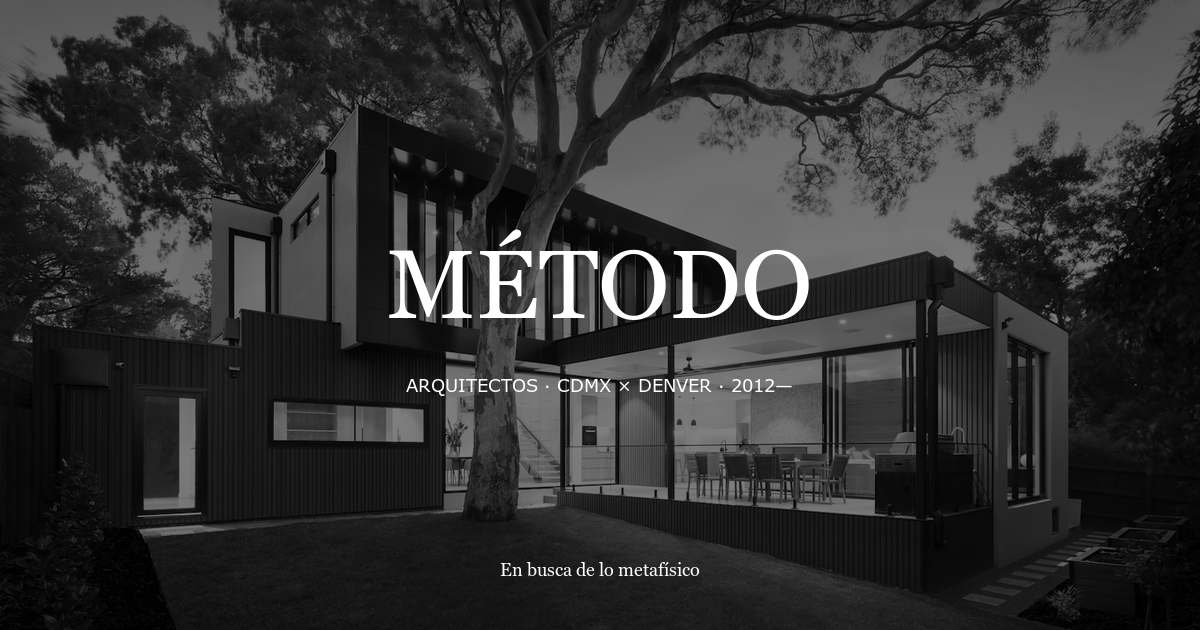
An internal patio with a wood shade structure is one of the most spatially effective elements in residential architecture. The patio as organizador — the space that rooms arrange themselves around — works at its best when the shade structure defines the vertical dimension and the enclosure without closing off the sky.
In MÉTODO, we design internal patios where the section is the primary design instrument. The section as relato: the vertical relationship between rooms, shade structure height, and sky opening tells the story of the space.
The Section Logic of an Internal Patio
Before any wood species is selected or any beam size is drawn, the section determines the proportions. Three dimensions govern the internal patio:
Floor-to-sky opening: the ratio of the open sky area to the floor area. A patio that is too enclosed feels like a room with no roof. One that is too open fails to create the enclosure that makes it feel distinct from the exterior.
Shade structure height: the point at which the wood structure intercepts the sky. In our projects this ranges from 2.5 to 3.5 meters depending on the adjacent room heights and the desired light quality at the patio floor.
Wall height to shade structure: the relationship between the surrounding wall height and the shade structure creates the enclosure quality. When the walls extend significantly above the shade structure, the patio feels compressed. When the shade structure is near the top of the walls, the space feels open and connected to the sky.
These proportions are set in section before any plan is detailed.
Wood Structure Choices for the Internal Patio
The wood shade structure in an internal patio is semi-exposed — protected from direct rain by the partial overhead coverage of surrounding roofs, but subject to humidity, UV radiation, and the thermal cycling of an outdoor environment.
The structure options we use in residential projects:
- Ipe pergola beams: dense, naturally durable, requires minimal maintenance. Takes a fine finish. Higher cost but lower maintenance over a 15-year cycle.
- Thermally modified timber: treated to reduce moisture movement. Takes stain well. Lower initial cost than ipe. Good choice for complex geometries where bending or cutting is required.
- Cedar: naturally resistant to decay, widely available, visually warm. Requires reapplication of oil or semi-transparent stain every two to three years. Appropriate for projects where maintenance access is easy.
- Steel and wood composite: the primary structural members are steel tube, and the wood is a secondary finish element. This allows a thinner structural profile with a warm visual quality.
Openings in the Wood Shade for Light and Air
A fully solid wood overhead in an internal patio produces flat, even light — comfortable but not dynamic. A partially open structure allows direct sun beams to track across the patio floor, creating a changing light condition through the day.
The ratio of solid to open in the shade structure is set by the orientation of the patio and the desired shade pattern:
- For a south-facing internal patio (in the northern hemisphere): a louvered structure oriented east-west allows morning and afternoon light to enter while blocking the high midday sun
- For a west-facing patio: a solid overhead covering the west portion and an open section on the east side controls the intense afternoon light while maintaining morning openness
The opening pattern is drawn at 1:20 scale before materials are specified.
Connection to the House Ventilation
The internal patio contributes to the thermal behavior of adjacent rooms through the stack effect. As air heats in the patio, it rises and exits through the open sky. This creates a low-pressure zone that draws cooler air from the lower zones of adjacent rooms.
For this to function, the patio must have some vertical connection to adjacent spaces — not just visual connection through glass, but operable openings or high grilles that allow air movement. A sealed glass wall between the interior and the patio prevents the ventilation effect.
In our projects, we specify operable doors or louvered panels at the interior-to-patio threshold so occupants can control when the ventilation path is open.
Próximos pasos
An internal patio with a wood shade structure is a spatial organizer, a light source, and a ventilation tool in a single element. Getting the proportions right in section is the work that makes all the material decisions consequential. To understand how this process works in our residential projects, conoce el método de MÉTODO.