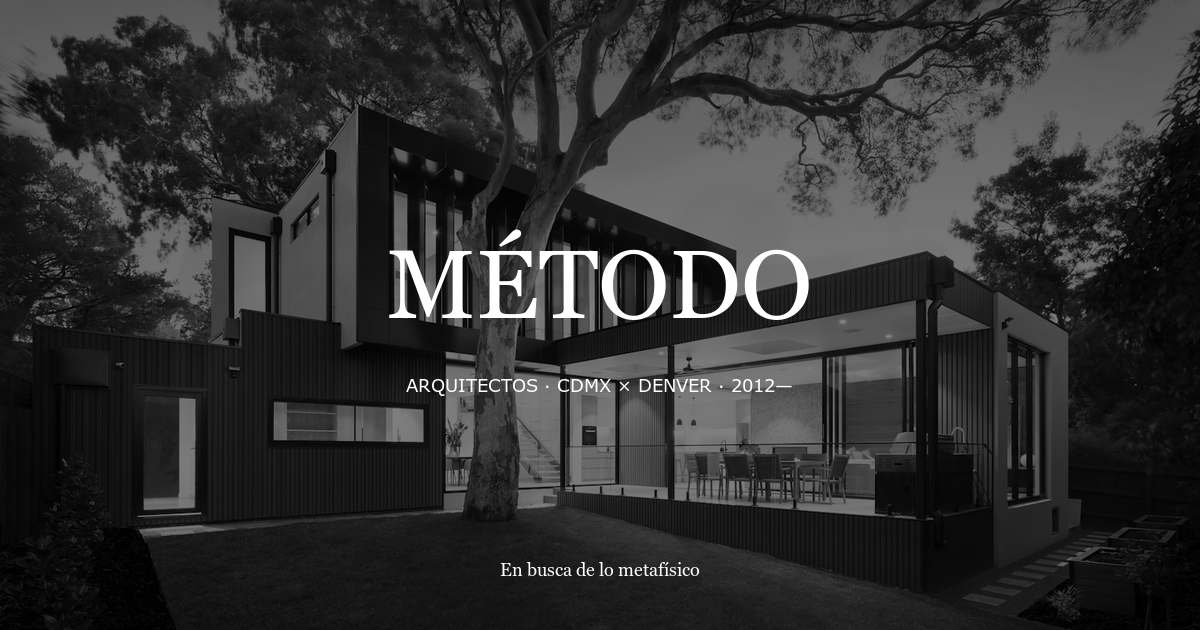
Honest material expression is one principle: the material you see is the material that is working. Not cladding. Not veneer. Not stone applied over block to look like a stone wall. When MÉTODO uses exposed concrete, structural stone, or an unfinished wood beam in a residential interior, those materials are performing a spatial, structural, or thermal function — not playing the role of a material.
This distinction has practical consequences. A genuinely structural stone wall is 40 to 60 centimeters thick. A stone-clad block wall is 20 centimeters of block plus 3 centimeters of stone. They look similar. They perform differently: the structural stone wall has thermal mass; the clad wall does not. The structural stone wall is permanent; the cladding is a finish that can fail. The choice is not aesthetic. It is technical.
Why Dishonest Materials Fail Over Time
The failure mode of inauthentic material expression is deferred cost. A stone veneer over concrete block looks indistinguishable from structural stone for the first five to ten years. Then the different thermal expansion rates of the two materials — stone moves differently than block in response to heat and moisture — begin to open the joints. Water infiltrates. The veneer cracks or separates.
The repair cost for failed stone cladding over block is high because the entire veneer must often be removed and reinstalled. The repair cost for a structural stone wall that has developed a crack is localized: repoint the joint with matching mortar.
Materialidad honesta — honest material expression — is therefore a durability argument as much as an aesthetic one. Materials that are being asked to do only one job — appearance — eventually fail at that job. Materials that are doing multiple jobs — structural, thermal, spatial, and visual — are more robust.
Exposed Concrete in Residential Interiors
Exposed concrete is one of the most commonly attempted and most frequently failed honest materials in residential architecture. The reason is sequence: exposed concrete requires decisions at the formwork stage, before the pour. Attempting to achieve an exposed concrete finish by grinding or polishing a slab that was not designed for exposure is producing a cosmetic result, not an honest one.
Correct exposed concrete specification includes:
- Formwork material and joint pattern planned as part of the architectural design. Board-formed concrete, smooth plywood, or ribbed formwork each produce a distinct surface texture that reads as a design decision, not an accident.
- Concrete mix design that achieves consistent color and minimizes surface voids. A standard structural mix with no attention to aggregate or admixtures produces an unpredictable surface.
- Pour sequence and vibration procedure that prevents segregation of aggregates near the form face.
- Penetrating sealer rather than film-forming coating, to protect the surface without obscuring the material's character.
When this sequence is followed, the concrete ceiling or wall is the structural element — it carries load, defines the space, and is the finish simultaneously. No added layer.
Stone in Interior Use: Structural vs Applied
In MÉTODO's residential interiors, stone appears in two conditions: as structural or semi-structural wall material and as flooring. In both cases, the stone's presence is justified by function, not by decoration.
A structural stone wall in an interior is typically 30 to 60 centimeters thick. It is the building's thermal mass. It carries vertical load. Its texture — rough-cut, split-face, or lightly dressed — is the finish. There is nothing behind it but earth or structure.
A stone floor is structural in the sense that it is the wearing surface. The stone is selected for hardness, slip resistance when wet, and thermal mass properties appropriate to the climate. Cantera, quartzite, or local limestone are specified not for style but for performance in the specific climate and use condition.
Wood: Structural and Honest
Wood in residential interiors can be honest in several ways. A structural timber beam that carries an actual load is honest. A wood floor that is the finished surface is honest. A wood panel that conceals drywall behind it is not honest — it is a costume.
The process before the style: when wood appears in a MÉTODO interior, the first question is what it is doing. If it is structural, it is sized for the load. If it is a finish surface, it is selected for durability and for how it will look after ten years of use. Piedra, madera y concreto: materiales que envejecen con dignidad. Wood ages. The design should account for how it will age, not pretend it will look the same forever.
Próximos pasos
Honest material expression in residential interiors begins at the design and specification stage, not at the construction stage. The decisions about what is exposed, what is covered, and what is doing structural work must be made when the section is designed and before the first line of specifications is written.
If you are considering a residential project where the materials are meant to last and to age well, the conversation begins with what the materials are being asked to do. Conoce el método de MÉTODO.