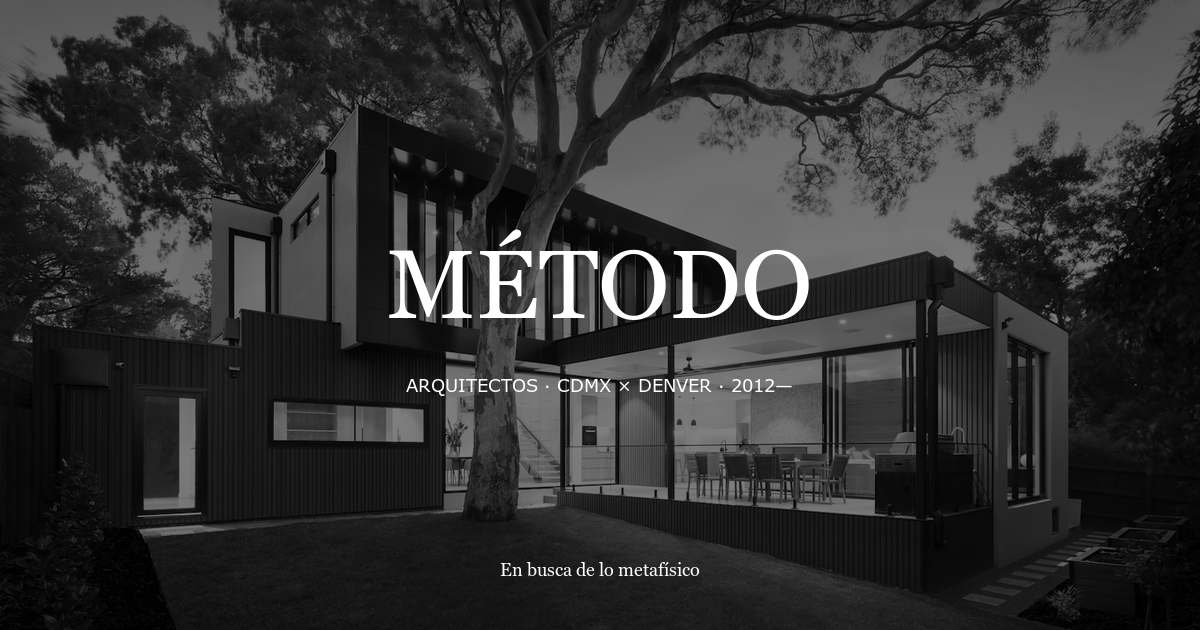
The design process matrix is how MÉTODO structures every project from first conversation to construction completion. At each phase, a defined set of drawings, models, or specifications is produced and reviewed with the client before the next phase begins. The matrix of options — presenting clients with a range of resolved alternatives at each decision point — is the core of how we avoid the common failure of design by default.
Why Process Structure Matters More Than Style
Most residential design frustration comes from one source: clients are asked to make decisions about things they cannot yet see, evaluate, or compare. An architect presents a single scheme and asks for approval. The client approves because they do not know what else to ask for. The result is a house shaped more by omission than intention.
The design process matrix corrects this. Before a client approves any phase, they see alternatives that have been developed to a comparable level. The decision is always comparative: this section configuration versus that one, this material pairing versus the alternative. The process before style — that principle shapes every phase.
Phase One: Conversation
The conversation phase precedes drawing. In MÉTODO, this phase produces a written program document: uses per space, adjacencies, site constraints, climate data, and a construction budget envelope. No sketches are produced until the program is agreed upon.
This phase also includes site analysis — solar angles, prevailing wind, views to preserve and views to block, topography, and any existing structures. The section as narrative begins here: how does the building cut through its site to manage light, ventilation, and threshold between spaces?
Deliverable: signed program document and site analysis memo.
Phase Two: Schematic Design
Schematic design is where spatial ideas are tested at reduced scale. We work at 1:200 and 1:100 — scales that reveal proportional logic without demanding dimensional precision too early. The goal is to resolve three things:
- Spatial organization: how rooms and circulation relate to each other and to the site
- Section logic: how the building manages light, height, and threshold vertically
- Material hypothesis: which primary materials are being proposed and why
At the end of schematic design, the client receives a matrix of options — typically two to three resolved scheme variants — with a written analysis of the trade-offs. The client selects a direction. Only then does design development begin.
Schematic drawings typically include site plan, floor plans, primary sections, and massing model or physical study model. No renderings. Renderings at this stage are premature and misleading.
Phase Three: Design Development
Design development takes the approved schematic scheme and resolves it into dimensioned drawings coordinated with structure and building systems. This is where the material palette is confirmed, window and door schedules are drafted, and the structural engineer produces a preliminary scheme.
Interior dimensions, ceiling heights, stair geometry, and millwork profiles are defined in this phase. By the end of design development, a contractor could produce a rough cost estimate with reasonable accuracy.
Deliverable: coordinated floor plans at 1:50, sections at 1:50, exterior elevations, interior key elevations, material schedule, and preliminary structural scheme.
Phase Four: Construction Documents
Construction documents are the permit set and contractor bidding package. Every dimension, material specification, connection detail, and finish is defined. In MÉTODO, we produce construction documents at a level of detail that eliminates ambiguity in the field — because ambiguity in the field costs money and time.
The drawing set includes architectural plans, reflected ceiling plans, sections, details, door and window schedules, finish schedules, civil drawings for site, structural drawings, and MEP coordination drawings. The specification document defines acceptable products and installation standards for every major system.
Permit submission happens at the end of this phase, in parallel with contractor pricing.
Phase Five: Construction Administration
Construction administration is the least understood and most important phase for quality control. In MÉTODO, we conduct regular site visits at defined milestones — not on a fixed weekly schedule, but tied to construction events: foundation pour, structural frame completion, exterior envelope closure, millwork installation, finish application.
Between visits, we manage RFIs (requests for information from the contractor), submittal reviews (material samples and shop drawings), and change order evaluation when field conditions require deviation from the documents.
The design is complete when the building is. Construction administration is not optional in an authored residential project.
Next Steps
Understanding the phases clarifies what you are committing to and what you will receive at each stage. If you are considering a residential project, the most productive first step is a direct conversation about your site and program — before any drawing begins.
Conoce el método de MÉTODO — how our full design process works from first conversation to construction completion.