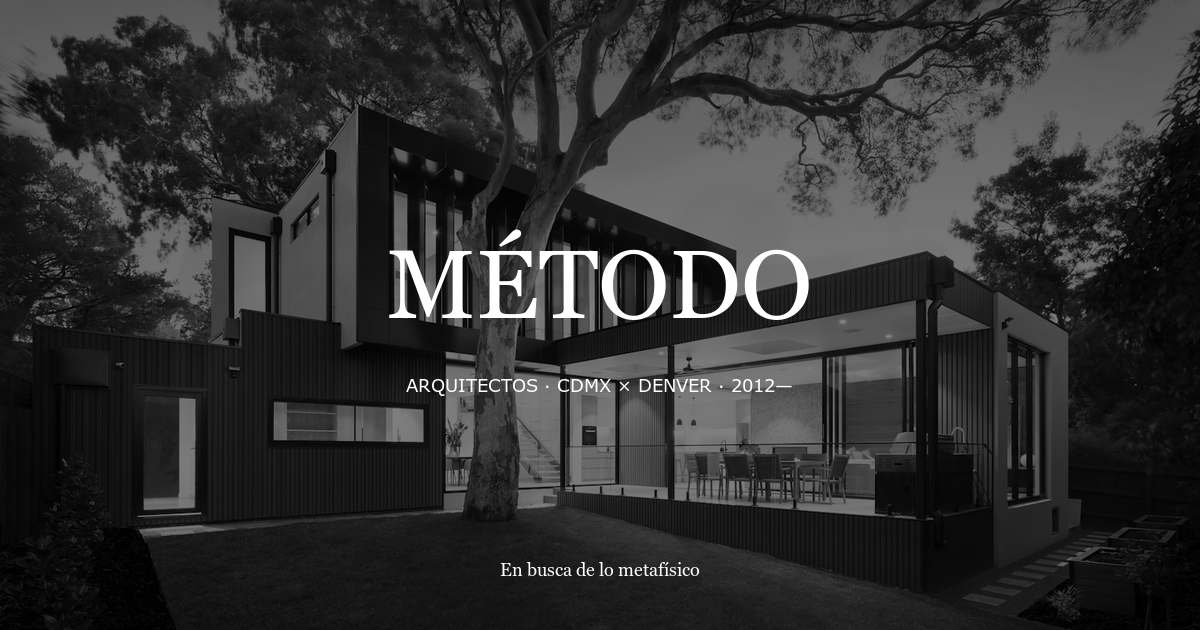
At high elevation, concrete is not simply a material choice — it is a climatic response. Above 7,000 feet, freeze-thaw cycles, UV intensity, and temperature swings of 50 degrees within a single day change what concrete must do. In MÉTODO, we design for these conditions from the first sketch.
Elevation Changes the Structural Equation
The physics of concrete at altitude begin with the mix. Air-entrained concrete resists the micro-cracking that freeze-thaw cycles create in standard mixes. This is not an upgrade — it is the baseline. Aggregate selection, water-cement ratios, and curing protocols all require adjustment when you build above 7,000 feet.
Structural loads also shift. Snow accumulation on flat or low-slope roofs at high elevation can exceed the assumptions of standard residential code. We work with engineers who understand these site-specific load conditions before the section is drawn.
The foundation sits in a different soil. Frost depth in Colorado mountain zones can reach 36 to 48 inches. Footings must extend below the frost line, and drainage must be designed to prevent ice lens formation beneath slabs. These are not details we resolve at construction administration — they shape the section from day one.
Thermal Mass as Climate Tool
Concrete's thermal mass is its most valuable property at altitude. High-elevation sites receive intense solar radiation during the day and lose heat rapidly at night. A well-designed concrete envelope absorbs that daytime heat and releases it slowly after dark, moderating interior temperatures without mechanical systems carrying the full load.
This is what we call honest materiality: the material's physical behavior drives the design decision, not its surface appearance. A south-facing concrete wall placed correctly acts as passive heating infrastructure. A concrete floor at the right thickness stores enough heat to offset early-morning cold without any additional energy input.
The design variables are specific: wall thickness (typically 8 to 12 inches for residential thermal mass), glazing ratio on south versus north elevations, overhang depth calibrated to the site's latitude, and interior surface area exposed to occupied space. We resolve these through the section as a relato — the section as narrative — rather than treating them as engineering afterthoughts.
The Material's Surface Life at Altitude
Uncoated concrete at altitude weathers distinctly. UV intensity at elevation is higher than at sea level, which accelerates carbonation on exposed surfaces. This is not necessarily a defect. Board-formed concrete develops a patina that sharpens over years, recording the climate in its texture. Pigmented board forms, aggregate-exposed finishes, and integral color behave differently — we specify them based on orientation and exposure.
Sealers are a separate conversation. On horizontal surfaces subject to freeze-thaw, penetrating sealers that allow vapor transmission are preferable to film-forming products that trap moisture. On vertical surfaces, the choice depends on design intent. Piedra, madera y concreto: materiales que envejecen con dignidad — the objective is a building that looks better in twenty years than it does on opening day.
Wood and Concrete: The Altitude Pairing
In our high-elevation residential work, concrete rarely appears alone. Wood — heavy timber, glulam, or board-form paneling — provides acoustic warmth and thermal contrast that pure concrete interiors lack. The pairing is structural as well as material: timber spans that concrete cannot achieve without deep beams, and concrete masses that timber cannot anchor without added weight.
The junction between the two materials is where the design lives. A concrete wall meeting a timber roof requires expansion detailing that accounts for differential movement. A concrete floor beneath a wood ceiling needs vapor management. We resolve these junctions explicitly in construction documents rather than delegating them to the contractor.
What the Process Looks Like
The process before the style: our first site visit at a high-elevation project is not about views or orientation — it is about reading the site's climate. We document solar angles in winter and summer, prevailing wind direction, existing frost cracks in the rock outcroppings, and the depth at which the ground stays frozen. This observation informs the section before a single design line is drawn.
From observation, we build what we call a matriz de opciones — a structured comparison of the key variables before committing to a form. For a concrete home at altitude, the matrix includes: bearing wall versus column-and-beam structure, flat versus sloped roof profile, exterior insulation versus interior mass, and three to four finish systems. The client decides by comparing, not by guessing.
Construction at altitude also requires contractor selection with specific mountain experience. Concrete pours in cold weather, at reduced atmospheric pressure, behave differently than at sea level. We specify curing requirements in documents that contractors cannot improvise around.
Próximos pasos
A concrete home at high elevation is a precise instrument, not a scenic backdrop. The decisions that matter — mix design, section geometry, thermal mass placement, material junctions — happen in design, not on the job site. When those decisions are made with full understanding of the site's climate, the resulting building performs well and ages honestly.
If you are considering a concrete residence at altitude in Colorado or Mexico, conoce el método de MÉTODO to understand how we approach these conditions from the first day of design.