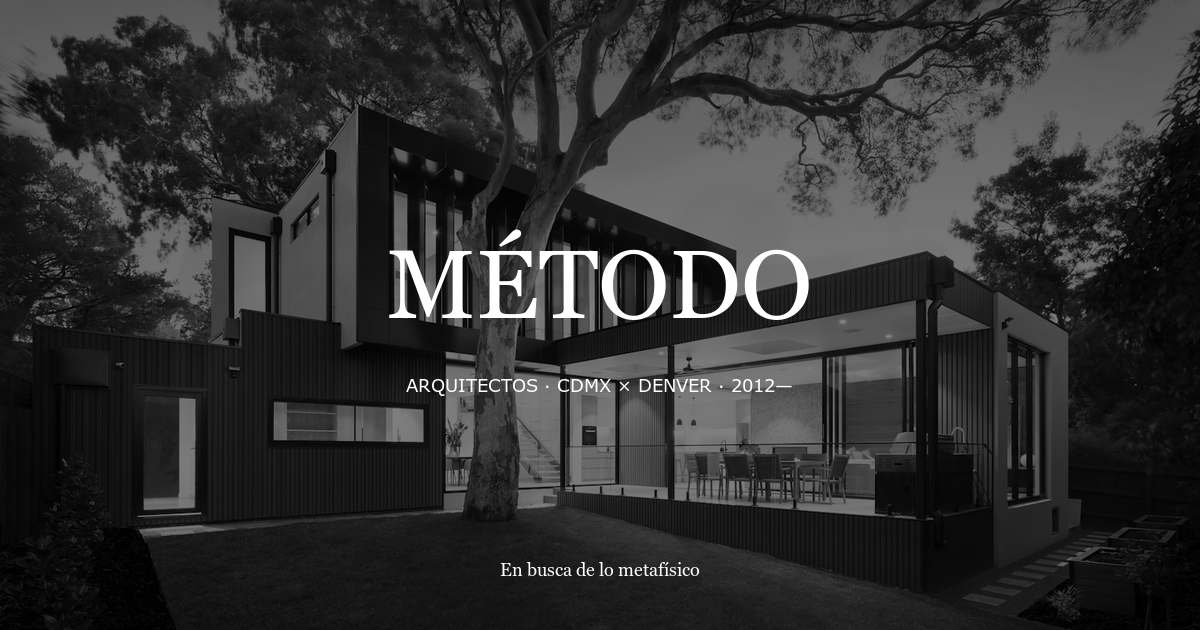
Bespoke interior design for a Denver residential project means resolving the interior as architecture — not as decoration applied after construction ends. In MÉTODO, we design interiors from the section outward: how natural light enters, where mass and texture create thermal and visual weight, and how material choices will read in ten years, not just at the photo shoot.
Denver's Physical Context Shapes Every Interior Decision
Denver sits at 1,609 meters above sea level — the Mile High City, as Wikipedia notes, with a semi-arid climate and more than 300 days of annual sun. That combination of altitude, low humidity, and intense solar angle is not background information. It directly determines which materials belong in a Denver interior and which do not.
Wood species that work in coastal or tropical climates can crack or cup in Denver's dry winters. Finish systems that rely on high humidity to cure properly must be reformulated. Stone is one of the most stable choices: Colorado limestone, granite, and certain imported marbles absorb the intense light at altitude without the glare that highly polished surfaces produce in lower-humidity, high-sun conditions.
We approach Denver interiors with the same climate-responsive thinking we apply in Mexico City, adjusted for the specific conditions of the Front Range. Respuesta climática is not a concept reserved for hot climates.
The Section as the Starting Point
A bespoke interior begins with a drawing, not a mood board. The section drawing — a vertical cut through the room — shows how ceiling height, window placement, floor level, and wall mass relate to each other. It is where spatial quality is decided.
La sección como relato: the section tells the story of what a person experiences walking through the space. A ten-foot ceiling with one high clerestory window reads very differently from the same height with full-height glazing on the south wall. The material choices — where stone meets plaster, where wood millwork begins and ceiling plane ends — are resolved in section before any material sample is ordered.
For Denver projects specifically, the south and west solar exposure is intense enough that we almost always design a shading strategy into the section: a deep overhang, a brise-soleil, or interior blinds integrated into the millwork. Asoleamiento — the study of solar angles across the day and year — is part of every interior package.
Material Palette for Denver Residential Interiors
The materials we specify most often in Denver share one quality: they age with dignity. Stone, white oak, concrete, and steel do not deteriorate; they patinate. Piedra, madera y concreto: materiales que envejecen con dignidad.
Specific choices for the Denver context:
- Colorado limestone: local, relatively light in tone, absorbs the high-altitude sun without glare. Works well as flooring, wall cladding, and feature surfaces.
- White oak: stable in dry climates when properly kiln-dried. We specify a penetrating oil finish rather than polyurethane to allow the wood to breathe through Denver's humidity swings.
- Concrete: board-formed concrete for feature walls or counters. The texture catches light differently than polished surfaces and reads well in Denver's intense natural light.
- Steel: blackened or left to develop a controlled patina. Used for stair stringers, shelf brackets, and window framing.
- Plaster: integral-color lime plaster rather than painted drywall for walls with material presence. Breathes with the space, repairs invisibly.
We do not design interiors around a single statement material. The palette works as a system; each element has a role in the thermal and visual logic of the room.
How the Design Process Works Across Two Cities
MÉTODO operates between Mexico City and Denver. For a Denver interior project, the process runs as follows:
The first conversation establishes the spatial brief: how the client uses the rooms, what the current section problems are (low ceiling, poor light, disconnected spaces), and what the material register should be. We work from this brief to produce a section study and initial material matrix de opciones — two or three palette directions, presented side by side so the client decides by comparing, not by guessing.
From approved direction: technical drawings for millwork and fixed elements, specifications for all materials, and coordination with local contractors. We schedule two to three site visits at critical milestones: rough framing if we are involved early, millwork installation, and final finish. The remainder of coordination happens remotely.
Denver has a strong local contractor base for high-end residential work. We coordinate directly with the general contractor and subcontractors, providing the technical drawings and material specifications they need to execute.
Próximos pasos
If you are planning a renovation or new build in Denver and want interiors that work from the architecture out — not from the catalogue in — the right starting point is a section conversation, not a finish selection.
Conoce el método de MÉTODO to understand the full process: how we move from brief to section to material to built result, and what working with an author studio looks like across both cities.