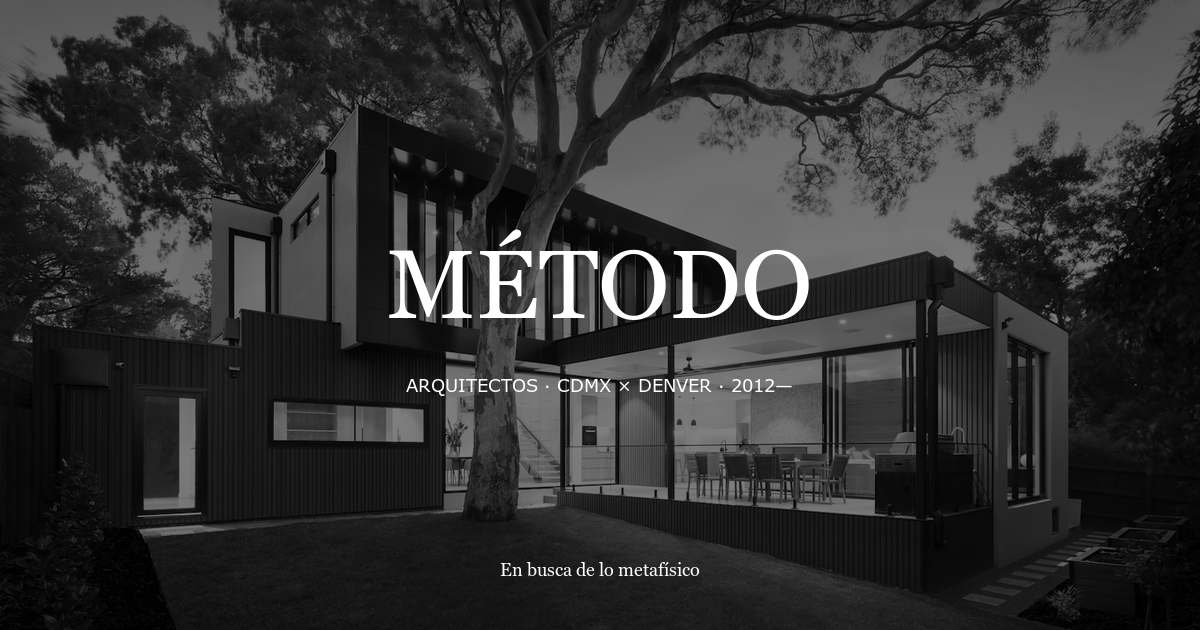
A coastal residence in Sayulita is not designed the same way as a house in Mexico City's Valle de Bravo or a highland property in Oaxaca. The Pacific coast of Nayarit is a hot-humid climate with intense solar radiation, prevailing sea breezes, salt air, and a culture of indoor-outdoor living that must be built into the architecture from the first section drawing.
In MÉTODO, we begin every project — coastal or otherwise — with a site-specific analysis before making any spatial decisions. The design logic follows from the place.
Reading the Sayulita Site
The Nayarit coast sits at approximately 21 degrees north latitude. In summer, the sun passes nearly overhead. In winter, it tracks lower and from the south. The prevailing afternoon breeze comes off the Pacific from the southwest.
Before the first sketch, we map:
- Solar angles by season on the specific lot
- Prevailing wind direction and seasonal variation
- Topographic slope and how it affects natural ventilation
- Neighboring structures and vegetation that create shade or wind shadow
This asoleamiento analysis — the study of sun angles and their architectural consequences — determines window size and position, the orientation of the primary living spaces, and the geometry of shade structures that make outdoor terraces usable through the hottest months.
The Section in a Coastal Residence
La sección como relato: the section as narrative. In Sayulita, the section carries more weight than in temperate climates because the vertical organization of the house directly affects ventilation.
A high, open roof ridge with ventilation gaps allows hot air to rise and escape. Living spaces set at ground level, open to a shaded courtyard or terrace, stay cooler than enclosed rooms at the same elevation. The section is the ventilation diagram.
We also use the section to negotiate the slope that characterizes many Sayulita lots — the topography becomes structure, with split levels that avoid extensive cut-and-fill and create spatial variety within a modest footprint.
Material Logic for a Salt Environment
Salt air and humidity degrade materials that rely on painted or coated surfaces. A finish that looks pristine at project delivery can blister and peel within two years in a marine environment.
We specify materials that are indifferent to salt and humidity by nature:
- Stone for exterior paving, retaining walls, and wet areas — it ages to patina
- Board-formed concrete for structural walls — unpainted, it weathers gracefully
- Naturally durable woods — species that do not require chemical treatment to resist rot
- Stainless steel hardware instead of chrome or painted metal
This is materialidad honesta applied to a coastal brief: the materials declare what they are and perform without maintenance intervention.
Indoor-Outdoor Architecture as Program
In Sayulita, the outdoor living area is not an amenity added after the house is designed. It is a primary room in the program. We allocate square meters to shaded terraces, transition zones, and covered outdoor dining with the same rigor we apply to interior spaces.
The patio as organizer takes a different form on the coast: rather than an enclosed courtyard, it becomes a linear covered terrace that runs the length of the social floor, shaded by a deep overhang that blocks the overhead summer sun while framing the ocean view.
The distinction between inside and outside becomes deliberately ambiguous. Folding or sliding systems allow the living room to open fully to the terrace. When open, the effective social area doubles.
Permit and Construction Reality in Nayarit
Coastal construction in Nayarit involves federal environmental permits — SEMARNAT authorization for projects within the federal zone — in addition to municipal building permits. Ecological conditions, proximity to protected vegetation, and lot classification all affect what is buildable.
We work through this process as part of the project. We do not design around permit reality — we design within it, understanding the constraints before committing the client to a program that cannot be authorized.
Próximos pasos
A coastal residence in Sayulita begins with a serious site visit and a frank conversation about the climate, the program, and the permit conditions specific to that lot. We do not quote or commit before that conversation.
Conoce el método de MÉTODO and understand what the design process looks like before the first drawing is made.